Yitzchak's very existence was a provocation to natural expectation. He was conceived by a ninety-year-old woman and a hundred-year-old man — born because God said he would be born, not because biology cooperated. His name was assigned before he was conceived: from the root tzachak, "to laugh." Avraham laughed when first told (Genesis 17:17). Sarah laughed at the tent entrance (Genesis 18:12). When the child was born, Sarah announced that God had made laughter for her. The impossible thing became the laughing reminder that nothing is too wondrous for the One who spoke it into being.
He grew up in the most unusual household in Canaan: a father who had walked from Ur on the strength of a divine voice, a mother who had been barren until old age, a half-brother sent away when Yitzchak was weaned. The Akedah came while he was still young — old enough to carry wood, old enough to ask where the lamb was. His willingness to be bound, without recorded protest, is one of the quiet acts of trust the Torah documents without commentary. He descended from the mountain with his father. The covenant continued through the son who had nearly been offered on the altar of it.
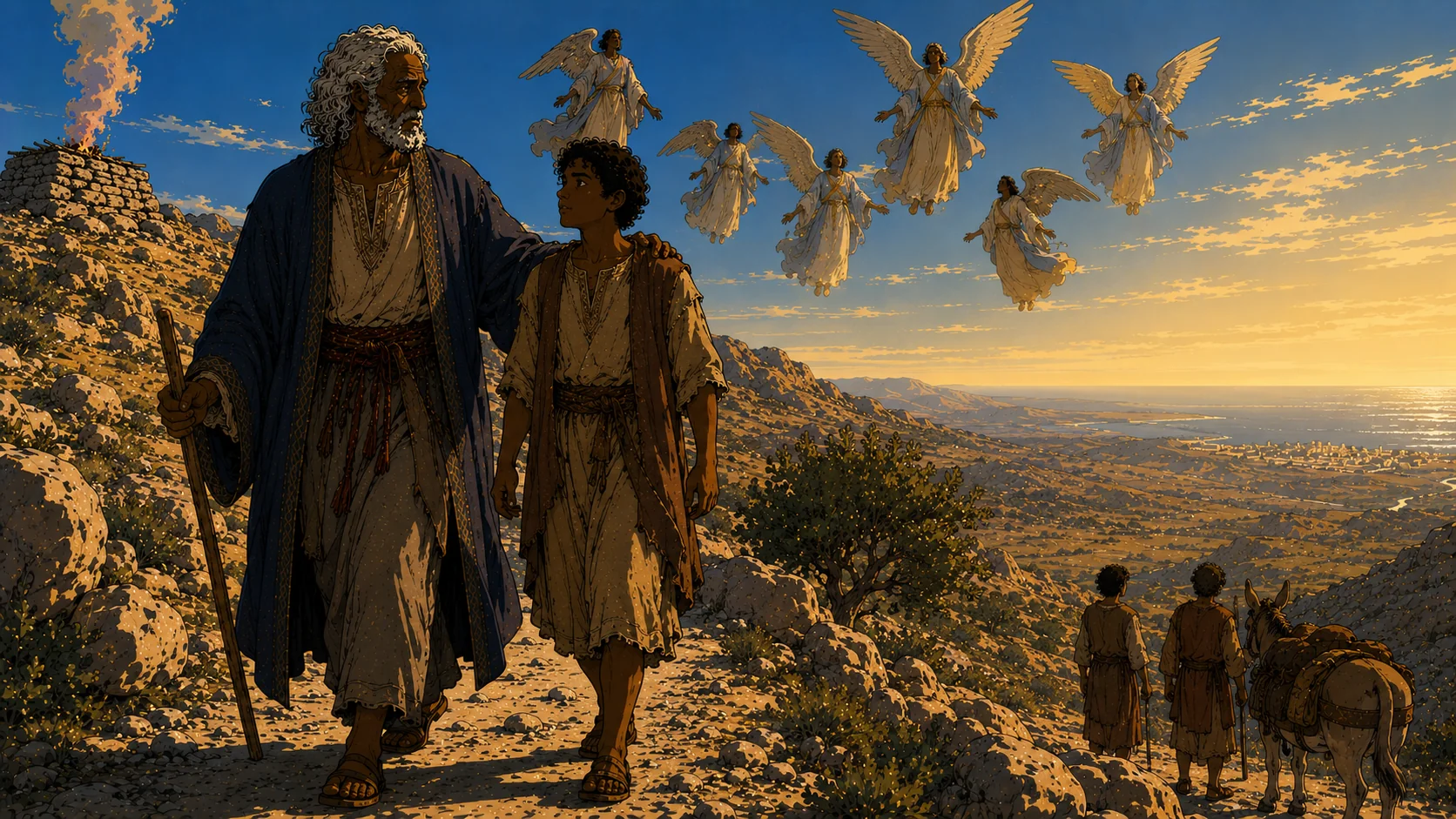 Bereshit 22:19 — They descended together. Yitzchak was not taken. He walked down the mountain with his father, carrying the weight of what had almost happened and the mercy of what had been provided.
Avraham, old and nearing death, gave his trusted servant an extraordinary mission: go back to my family in Mesopotamia and find a wife for my son — not from the daughters of Canaan. The servant placed his hand under Avraham's thigh, swearing the ancient oath on the covenant of circumcision, and departed with ten camels loaded with gifts. He traveled to Aram-Naharaim and stopped at the well outside Nachor's city as evening came. Then he did something remarkable: he prayed for a specific sign before acting — let the girl who offers water not just to him but to all ten camels be the one Elohim had chosen. Ten camels can drink hundreds of gallons. He was asking for someone of extraordinary character, not just someone who was available.
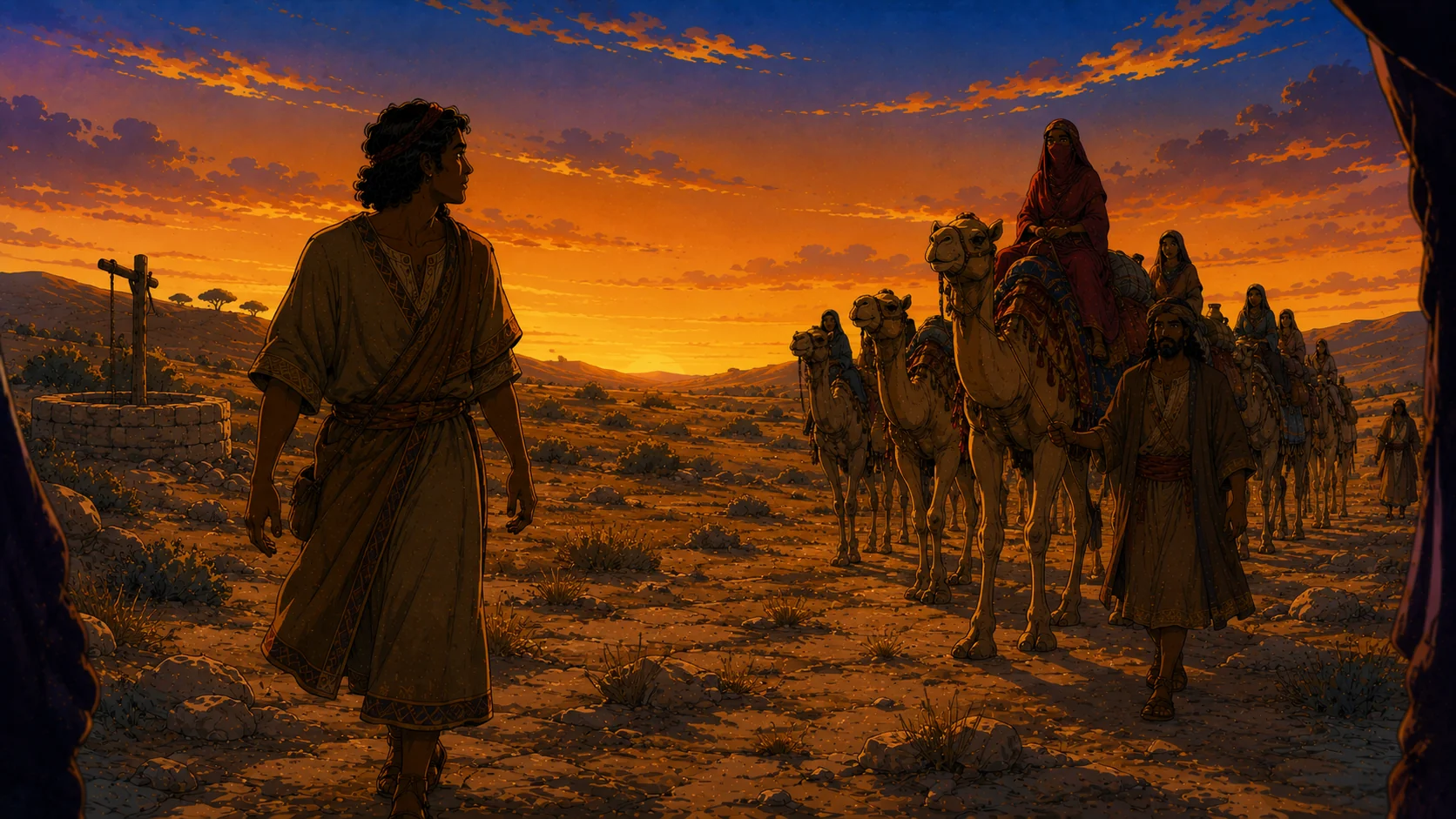
Before he had finished speaking, Rivkah arrived. She was beautiful, she was a virgin, and she was the granddaughter of Avraham's brother Nachor. She offered him water. She offered the camels water. She drew until they were satisfied. The servant bowed and worshipped — before he had even told her his name. He knew. When Rivkah's family asked her, "Will you go with this man?" — one of the most important questions in the Torah, though asked casually — she answered in a single word: Eikhlech. I will go. Yitzchak went out to meditate in the field at evening, lifted his eyes, and saw camels coming. She saw him, dismounted, and covered herself with a veil. He brought her into his mother's tent and was comforted after his mother's death.
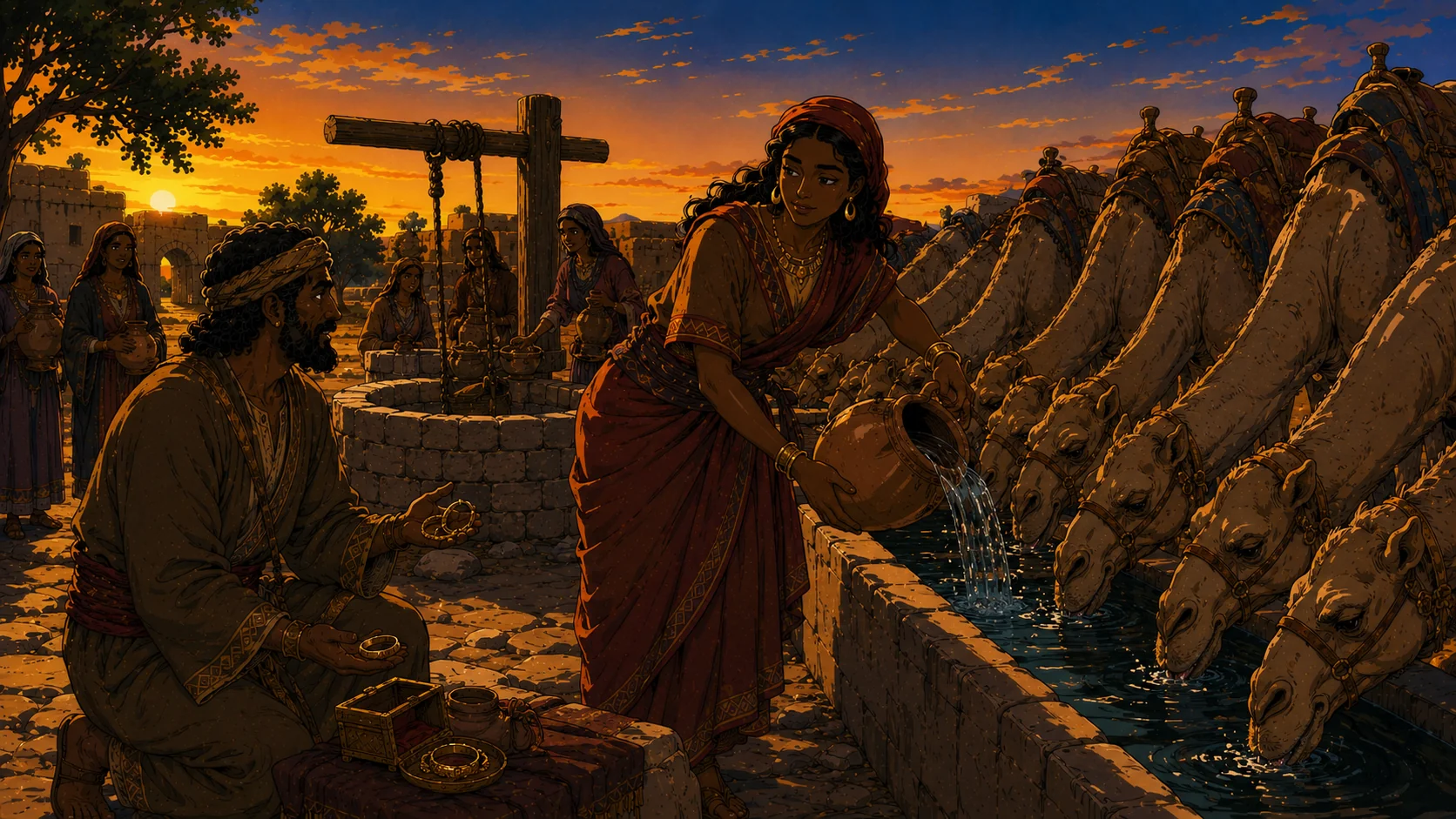 Bereshit 24:17–27 — She drew water for all ten camels, enough for them to drink their fill. The sign was confirmed. The servant bowed and worshipped the LORD.
Yitzchak and Rivkah married, and then twenty years passed with no children. This was not incidental. Every matriarch of the covenant — Sarah, Rivkah, Rachel — was barren before the covenant child was born. The pattern was deliberate: these births were not natural continuations of biological inevitability. They were answers to prayer, demonstrations that the covenant line was Elohim's to open and sustain. Vayetar Yitzchak l'Adonai lenokach ishto — "and Yitzchak pleaded with the LORD opposite his wife." It was a prayer of intercession, face to face, on her behalf. Elohim granted his plea.
Rivkah conceived — but the pregnancy was violent. Two children struggled inside her, and she went to seek Elohim's word: va'telech lidrosh et Adonai — "and she went to inquire of the LORD." The oracle she received was prophetic in scope: two nations were in her womb. Two peoples would be separated. One would be stronger than the other. And the older would serve the younger. This was spoken before either son had drawn a breath, before either had done anything to merit favor or disfavor. The reversal of primogeniture was declared in advance — a divine inversion that would take the rest of Genesis to unfold.
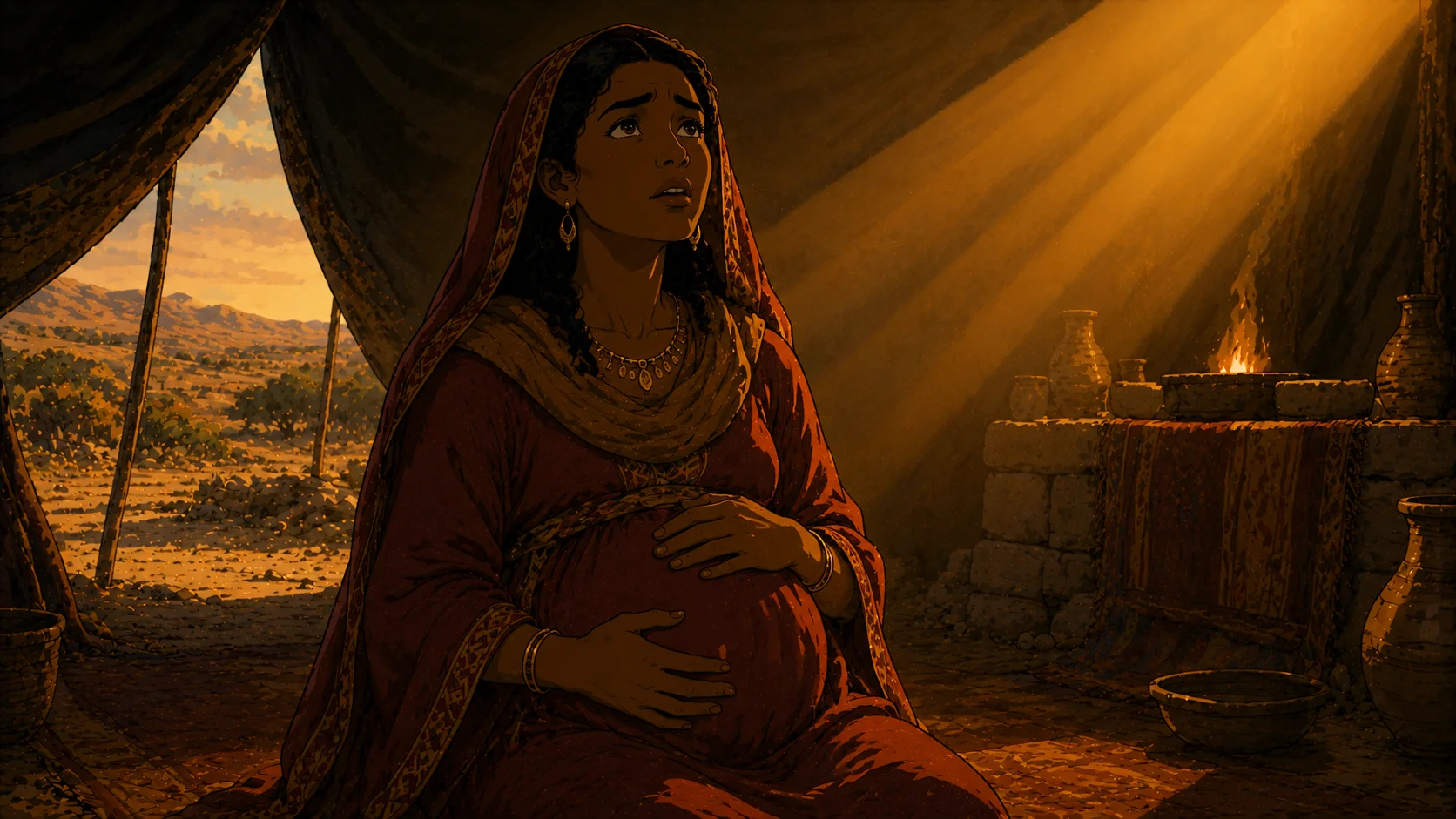 Bereshit 25:22–23 — The children struggled within her. She went to inquire of the LORD. "Two nations are in your womb — and the older shall serve the younger."
Yitzchak's arc includes a scene that defines his character: he dug again the wells his father had dug, wells the Philistines had stopped up after Avraham died. To dig his father's wells was to insist that the old water was still there — still good, still deep, still worth the work. The Philistines disputed the first well (Esek, "dispute"). They disputed the second (Sitnah, "enmity"). At the third he dug, they did not dispute — he named it Rechovot, "broad places," and said: "Now the LORD has given us room, and we will be fruitful in the land." Then Elohim appeared to him at Beer-sheba and said the words that carry every covenant generation: al tira ki ittecha anochi — "do not fear, for I am with you."
Yitzchak's life was shaped at every turn by things that happened to him — the near-sacrifice, the arranged marriage, the sons born of prophecy, the blessing stolen in the night. He was not a patriarch of dramatic initiative. His greatness was quiet persistence: repeating his father's altars, re-digging his father's wells, inheriting a covenant he received and passed on. He lived to see the blessing transferred to the younger son, a theft that fulfilled the oracle given before either son was born. He died at 180. Ya'akov and Esav buried him together — as Ya'akov and Yishmael had buried Avraham — and the covenant moved forward into the next generation that was already becoming a nation.
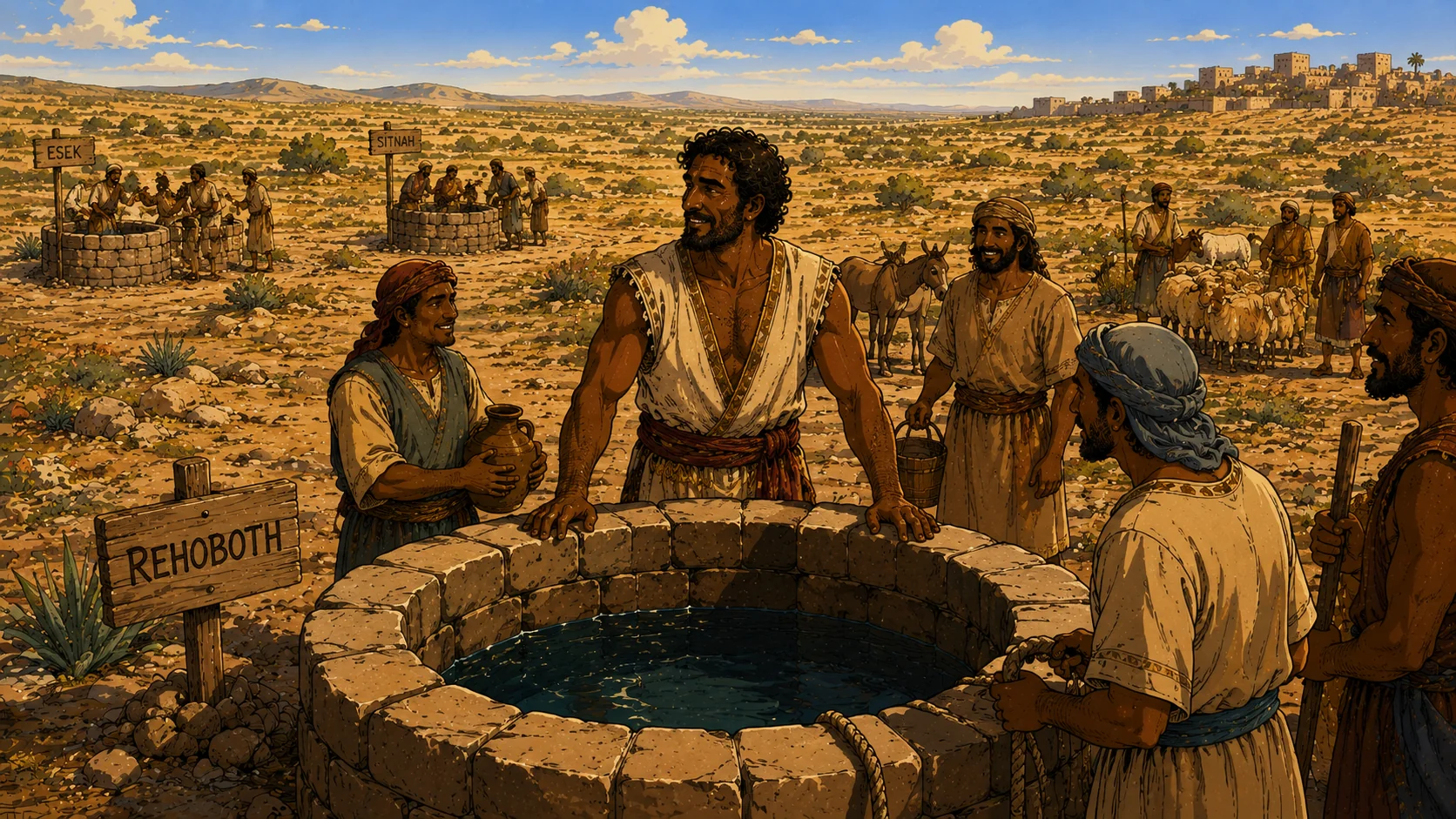 Bereshit 26:12–25 — Isaac digs his father's wells again. Disputed twice. At Rechovot — "room" — Elohim opens what others tried to close.
Yitzchak's greatness was not in dramatic action but in quiet faithfulness. He re-dug his father's wells. He held the covenant through twenty years of waiting. He received a son from a God who kept His word to a woman who laughed.
