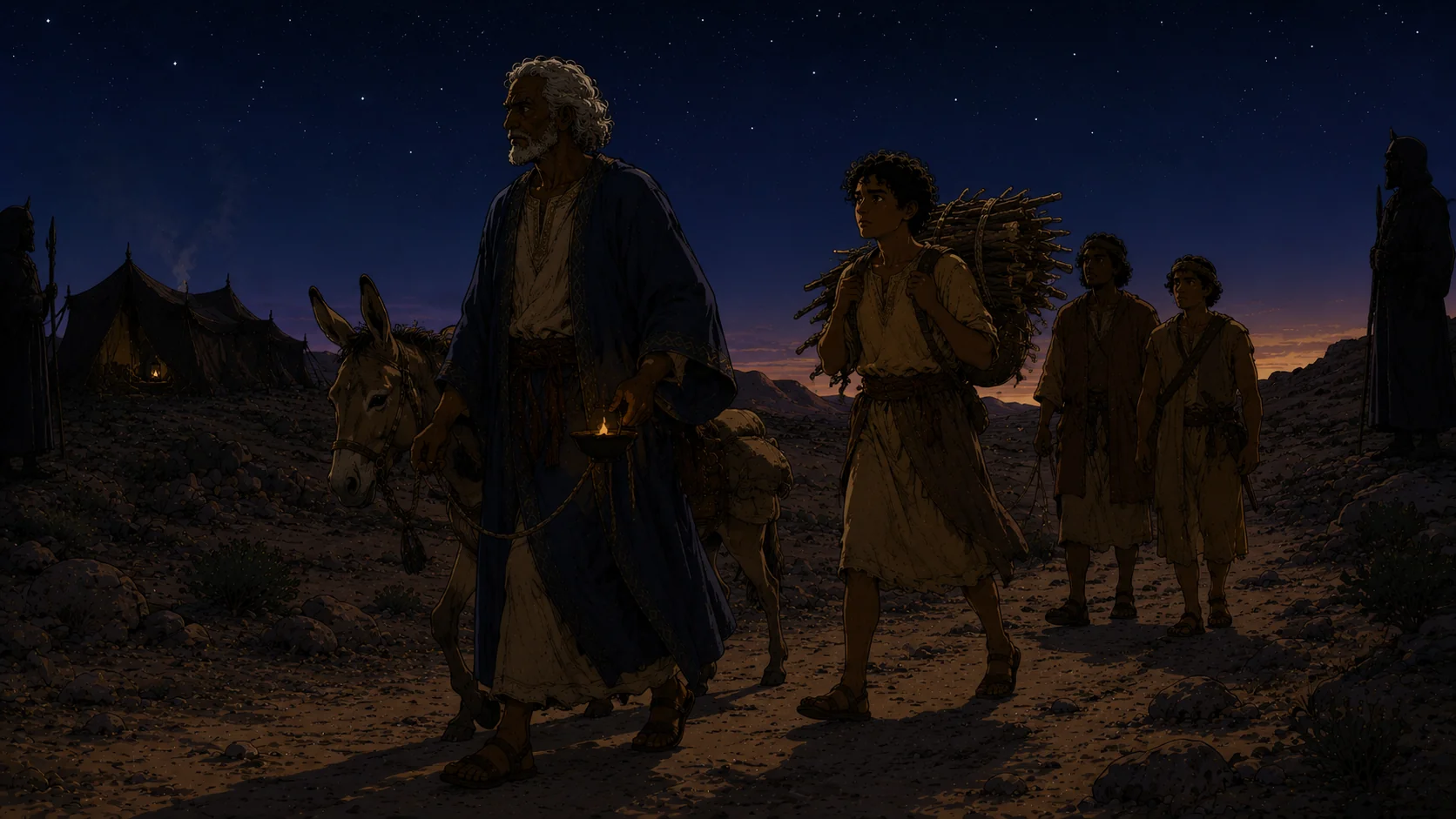
Avram was seventy-five years old when he left. The Hebrew command — lech-lecha — is unlike any ordinary departure command. It literally means "go for yourself," or "go toward yourself." Not just motion outward but motion inward: the journey was designed to strip away every layer of identity Avram had leaned on — his country, his family, his father's house — until what remained was only the man whom Elohim had called. He left Haran with Sarai, his nephew Lot, and a household they had gathered along the way. The destination was not given in advance. It would be shown.
He entered Canaan, and Elohim appeared to him at Shechem — at the oak of Moreh. The first recorded divine speech after the departure was a promise about the land. He built an altar there. He moved south to the hills east of Bethel and built another. The environment around him was Canaanite, polytheistic, and rooted in city-state power. Avram moved through it as an outsider — planting altars as markers that this ground belonged to a different story.
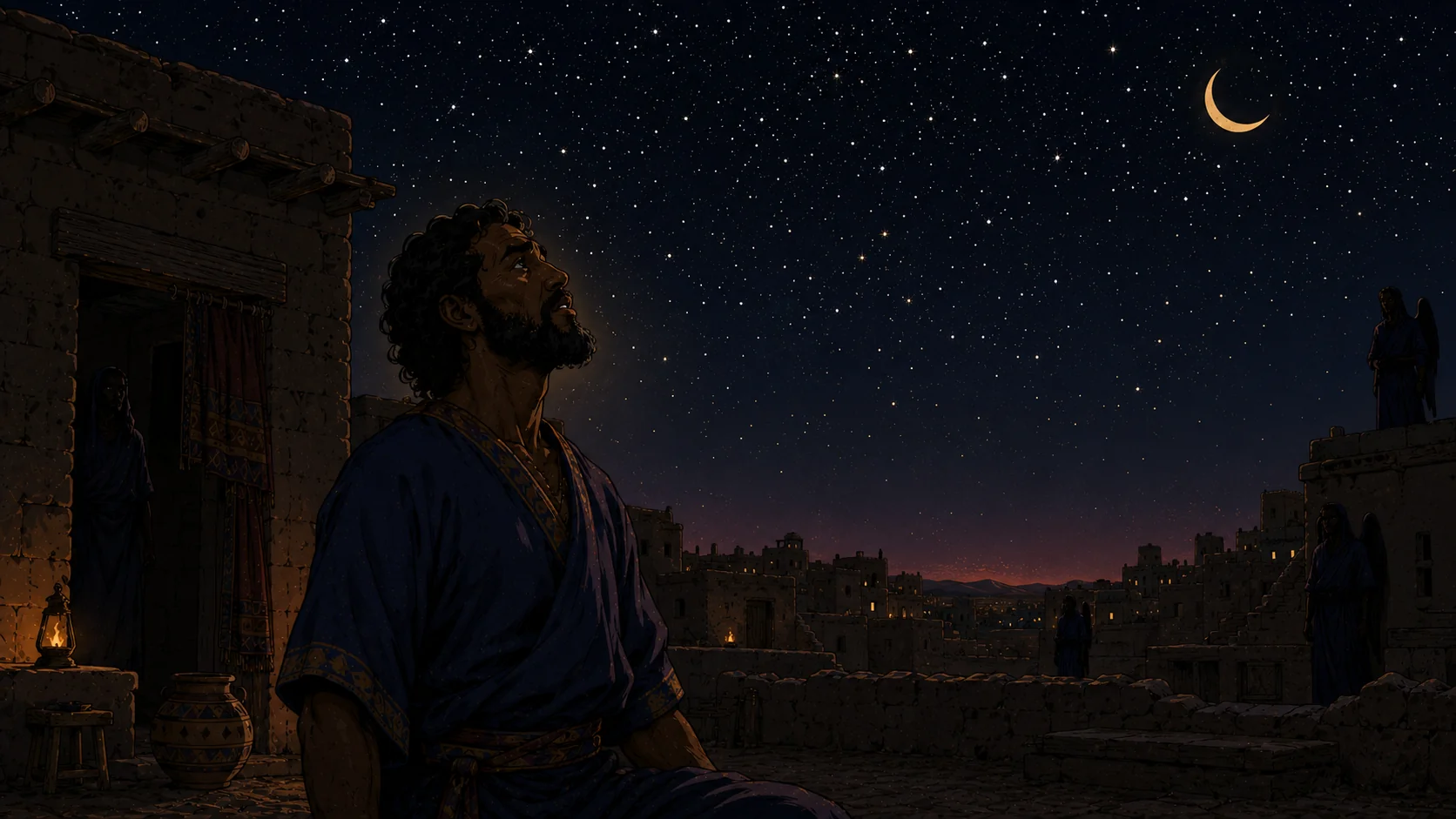 Bereshit 12:1–3 — The Call. Avram steps out of everything familiar into the open instruction of God.
After Avram rescued Lot from four kings — a military campaign by a man who had no army of his own, only trained servants — he returned to meet Melchizedek, king of Salem. This figure offered bread and wine and blessed Avram in the name of El Elyon, God Most High. Avram gave him a tenth of everything. Then came Elohim's night vision: al tira Avram — anochi magen lach — "Do not fear, Avram — I am your shield." And then the stars. Elohim took him outside and said: count them if you can. That is how your seed will be.
Genesis 15 records the most extraordinary covenant in the Torah. Avram brought five animals, split them in two, and laid the halves opposite each other. He drove away birds of prey. Then a deep sleep fell on him — tardemah — the same word used when Elohim caused Adam to sleep before taking his rib. In the dark, a smoking furnace and a torch of fire passed between the pieces. Only Elohim passed through. In ancient Near Eastern covenant ritual, both parties walked between the divided animals, saying in effect: may this happen to me if I break this covenant. Here, only the divine fire walked. Avraham slept. The covenant was one-sided by design — binding on Elohim alone.
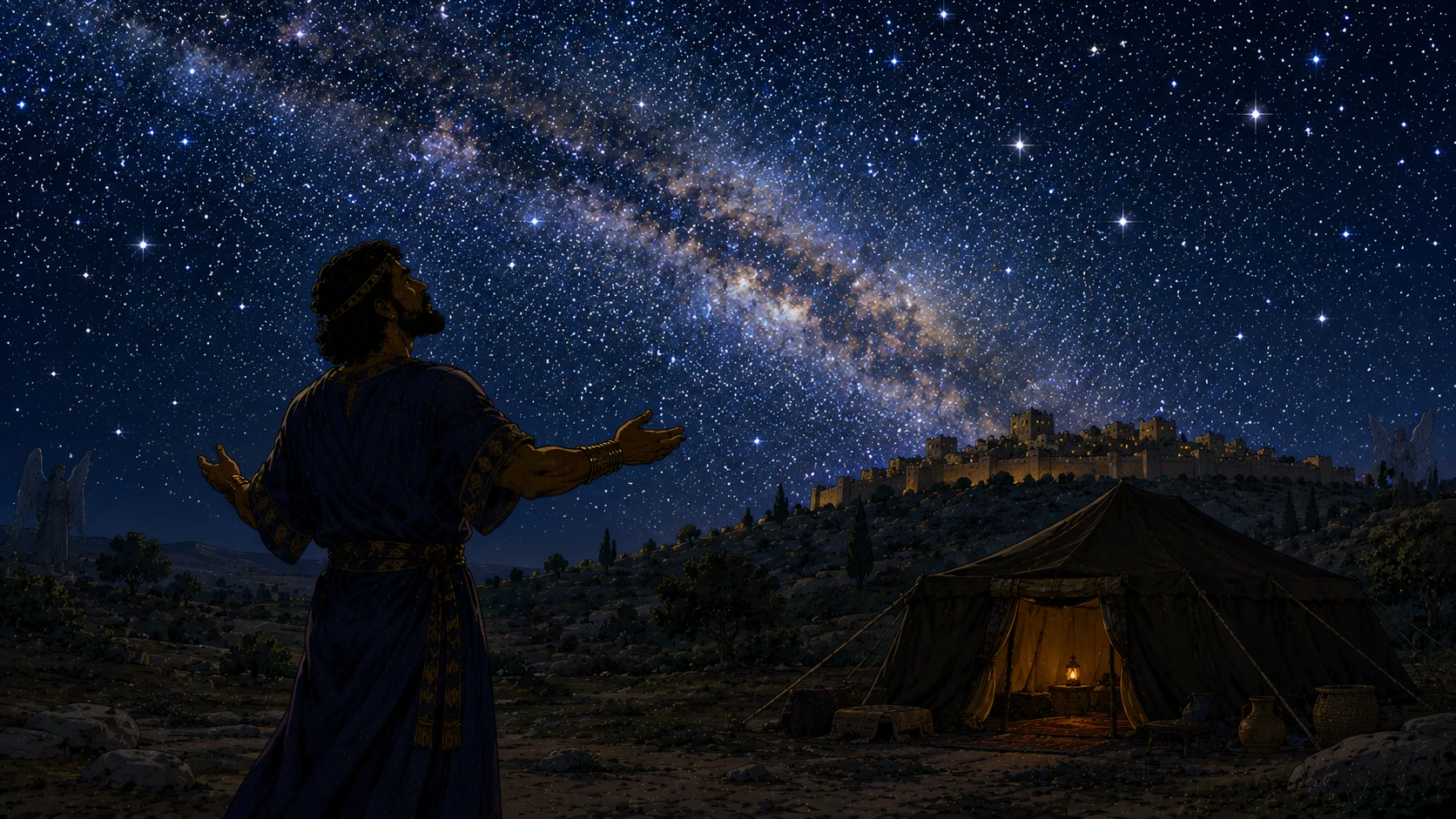 Bereshit 15:1 — Elohim takes Avram outside: "Look now toward heaven and count the stars — if you are able to count them. So shall your seed be."
Three men appeared at Avraham's tent in the heat of the day. He ran to meet them, bowed, and prepared a meal — veal, bread, curds, and milk — while they ate. When one said Sarah would have a son within a year, she laughed from behind the tent curtain. The question that followed has never been answered in full: hayipaleh mei-Elohim davar? — "Is anything too wondrous for God?" When the visitors prepared to leave toward Sodom, Avraham walked with them. Then Elohim paused. "Shall I hide from Avraham what I am about to do?"
What followed was the Torah's first recorded intercession — one man bargaining with the divine on behalf of a city full of strangers. Fifty righteous. Forty-five. Forty. Thirty. Twenty. Ten. There were not ten. Lot escaped with his daughters, pulled by angels who took them by the hand. His wife looked back and became a pillar of salt. The next morning Avraham stood at the place where he had bargained for Sodom and watched the smoke rising like the smoke of a furnace. The rescue had reached as far as it could reach — one man, and he had to be dragged out.
 Bereshit 19:24–25 — "And the LORD rained upon Sodom and upon Gomorrah brimstone and fire from the LORD out of heaven."
When Avram was ninety-nine, Elohim appeared and gave him the most demanding opening command of his life: hitlehálech lefanai v'heyeh tamim — "Walk before Me and be wholehearted." Tamim — the same word used to describe Noah — means blameless, complete, undivided. Then the covenant of circumcision: Avram became Avraham, "father of a multitude." Sarai became Sarah, "princess." Every male in the household, and every future son, would bear the mark of the covenant in his flesh. This was not symbolic. It was a permanent physical statement that the body itself was covenant ground.
At ninety, Sarah bore Yitzchak. His name — "he will laugh," or "laughter" — carried within it the memory of two moments: Avraham had laughed when first told (Genesis 17:17), and Sarah had laughed at the tent entrance (Genesis 18:12). The laugh of impossibility became the name of the promise fulfilled. Ishmael was sent away with Hagar into the wilderness of Beer-sheba. A well was opened. Elohim was with the lad. Two lines of descent left the same tent — one visible, one carrying the covenant weight forward.
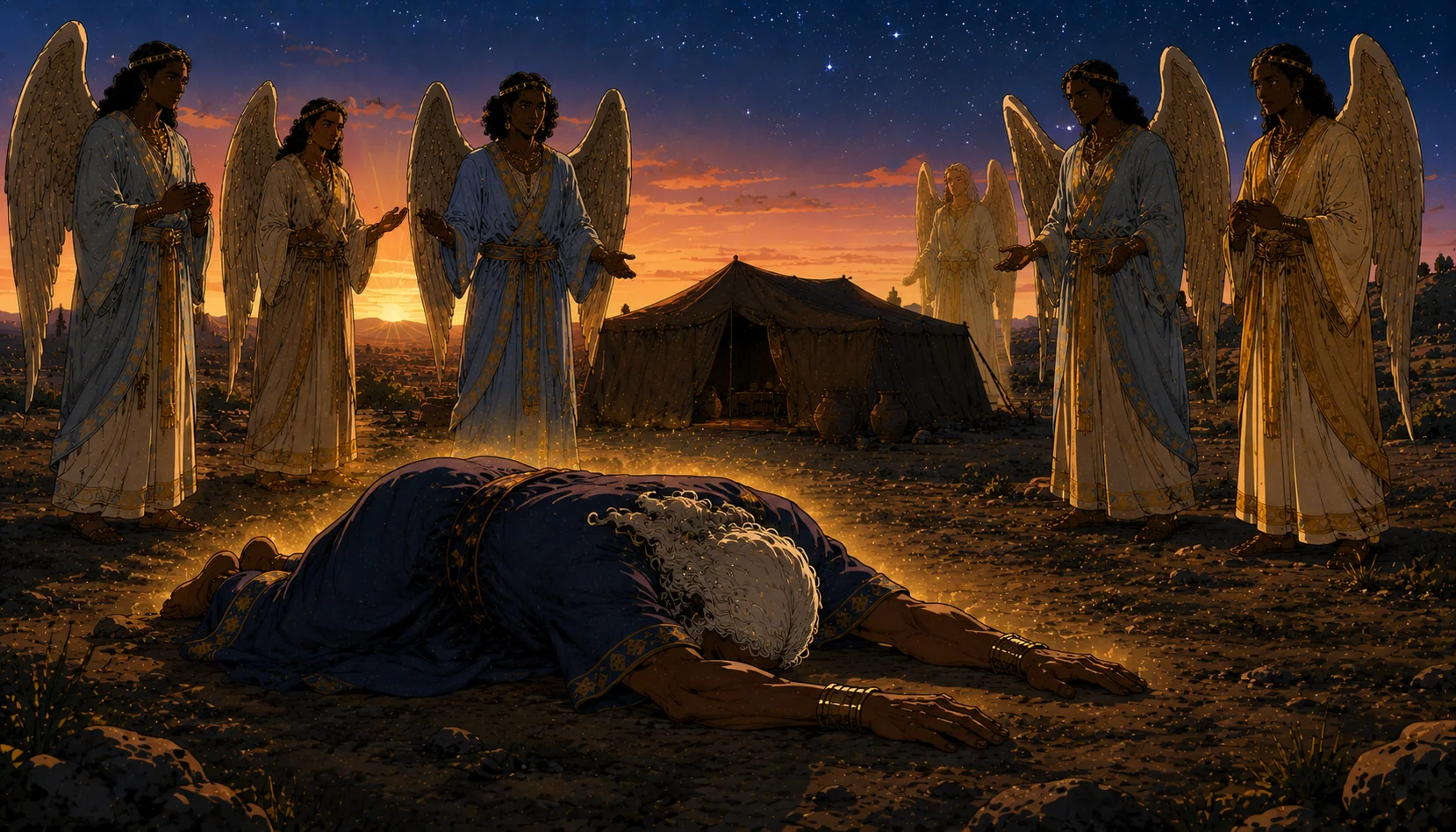 Bereshit 17:1–8 — At ninety-nine, Avram receives a new name. The covenant is broadened; the mark is written in flesh.
After everything — the years of waiting, the impossible birth, the sending away of Ishmael — Elohim asked for Yitzchak. The words were precise: kach na et bincha et yechidcha asher ahavta et Yitzchak — "Take now your son, your only one, whom you love — Yitzchak." Three days of travel. The wood laid on his son's back. The fire and the knife in Avraham's hands. Yitzchak's question pierced the silence: "Here is the fire and the wood — but where is the lamb for the offering?" Avraham's answer was the most loaded sentence in the Torah: Elohim yireh lo haseh l'olah bni — "God will see to the lamb for the offering, my son."
The angel stopped him as he raised the knife. A ram was caught in a thicket by its horns. Avraham offered it. He named the mountain Adonai Yireh — "The LORD will see, the LORD will provide." The angel called a second time and the covenant was confirmed with an oath: "because you have done this thing and have not withheld your son, your only son — I will bless you and bless you, and multiply and multiply your seed." The word for "withheld" — chasachta — appears only here and in Psalm 78:50. Avraham did not hold back. The covenant became irrevocable.
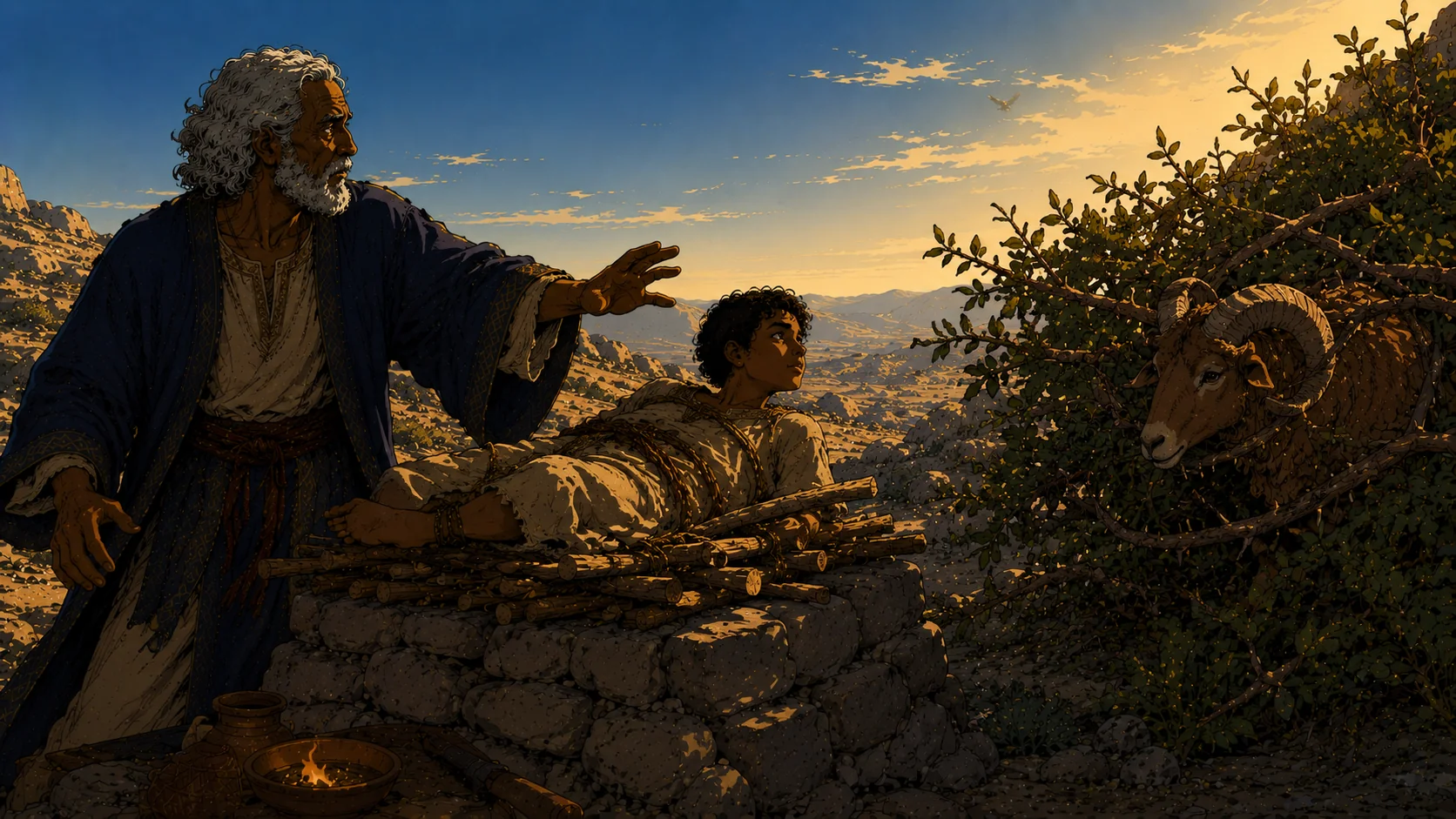 Bereshit 22:13 — Avraham lifted his eyes and saw: a ram caught in the thicket by its horns. He offered it instead of his son.
Avraham did not found a religion. He received a relationship — and it cost him everything he thought he could keep.
Sarah died at one hundred and twenty-seven in Hebron. Avraham wept and then rose from mourning to negotiate — openly, publicly, before all the Hittites — for a burial cave. He refused to accept it as a gift. He paid the full price: four hundred shekels of silver, "current with the merchant." The Cave of Machpelah at the field of Ephron became the first permanent land holding of the covenant people in Canaan. Not a city, not a farm. A grave. The inheritance began in the ground with the dead. He then sent his servant with an oath to find a wife for Yitzchak from his own family — and the servant returned with Rebekah. The covenant would continue.
Avraham died at one hundred and seventy-five. The Torah's summary of his death is among the most dignified in the text: b'seivah tovah, zaken v'savea — at a good old age, old and full. Yishmael and Yitzchak buried him together beside Sarah in the cave he had purchased. Two sons from two mothers, side by side for the last time, covering their father's body. A man who had left everything at seventy-five, spent one hundred years living inside a promise he never held in full during his lifetime, and died satisfied — as if the promise itself had been enough.
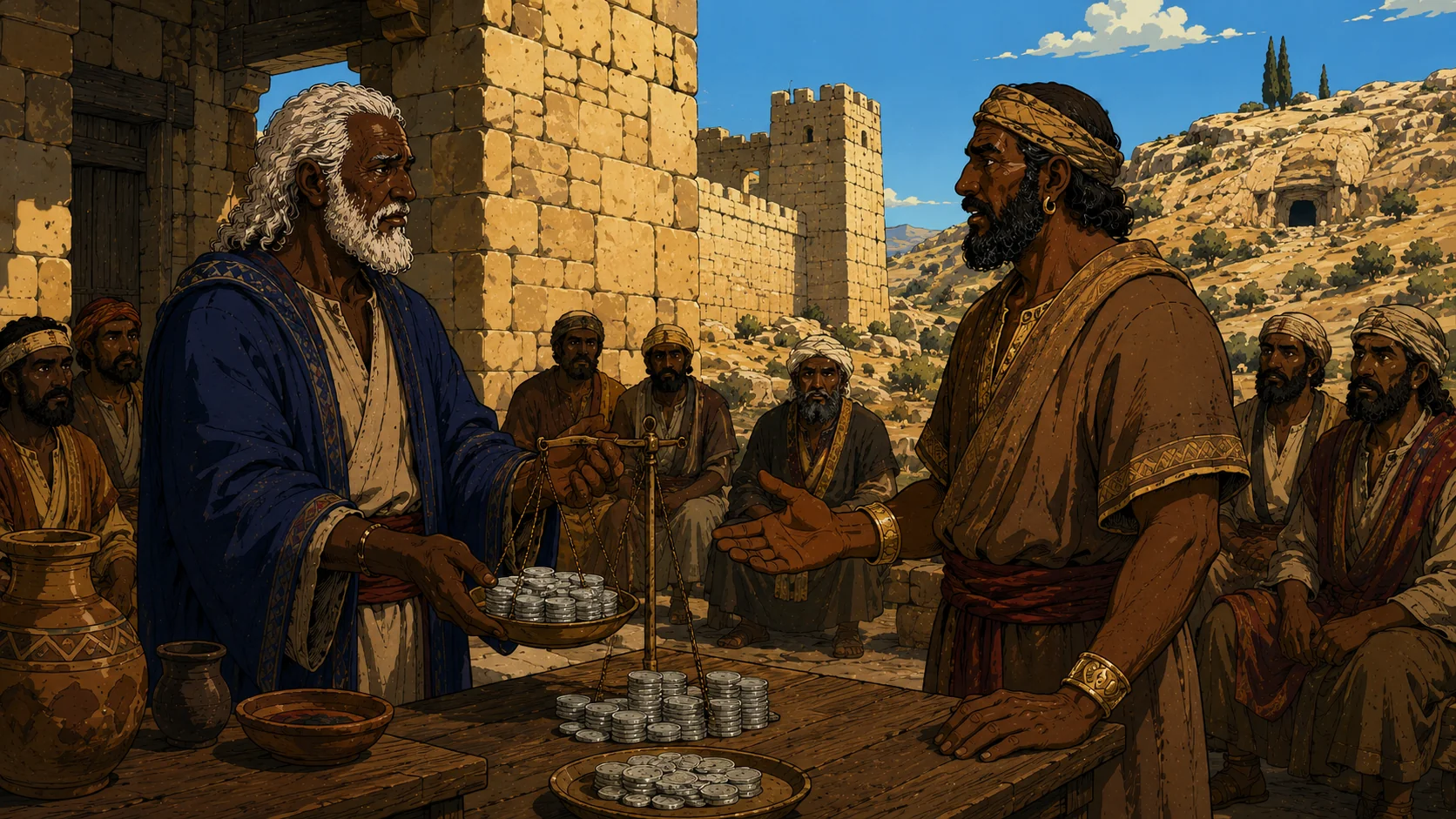 Bereshit 23:3–20 — The purchase of Machpelah: the first plot of covenant land, paid for in full at market price before witnesses.
