The Torah introduces the twins with deliberate contrast. Esau was a man of the field — skilled with a bow, red and wild, a hunter who lived in the moment. Ya'akov was a man of the tents — quiet, domestic, dwelling close to the household. Yitzchak loved Esau. Rivkah loved Ya'akov. The household was divided before any conflict began. When Esau came in from the field, famished, and smelled the red stew Ya'akov was cooking, he was willing to sell everything for a bowl of it. The birthright — the double inheritance, the covenant headship, the blessing — went for bread and lentils. Vayivez Esav et habechora — "and Esau despised the birthright." He ate. He rose. He left. And the Torah's verdict on that transaction is as flat as Esau's appetite.
The blessing of the firstborn, however, required Yitzchak's hand. When Yitzchak was old and blind and believed he was dying, he called Esau to receive it. Rivkah overheard. She dressed Ya'akov in Esau's clothes, covered his smooth arms with goatskin, and sent him in with the food. Yitzchak was troubled — "the voice is the voice of Ya'akov, but the hands are the hands of Esau" — and then he blessed him. Esau returned and wept. The blessing could not be taken back. Ya'akov fled that same night to Haran with nothing but the ground under his feet.
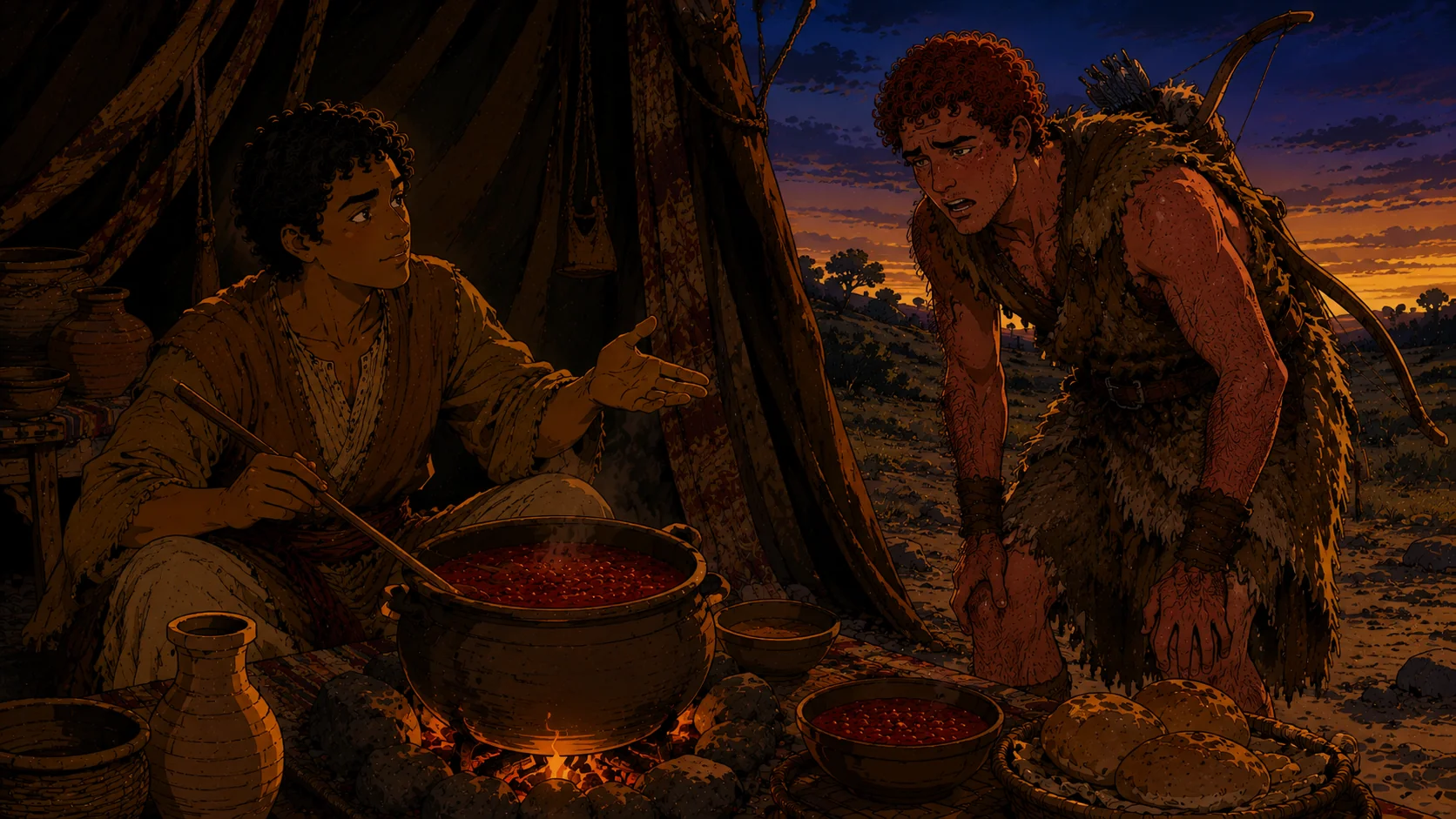 Bereshit 25:29–34 — A bowl of red stew, a famished man, and a single transaction that reshaped the destiny of a nation forever.
Fleeing alone toward Haran, Ya'akov stopped for the night with only a stone for a pillow. He dreamed: a ladder set on the earth, its top reaching heaven, angels ascending and descending on it. Elohim stood above it and renewed the Avrahamic covenant — the land, the seed, the blessing to all nations — specifically to the man who had just defrauded his brother and fled his father's house. When Ya'akov woke, he was shaken: "Surely the LORD is in this place and I did not know it." He had come expecting to sleep in an empty field. He found he had stumbled into the House of God.
Twenty years with Lavan in Haran followed. He worked seven years for Rachel, was given Leah instead on the wedding night, worked seven more years for Rachel, then six years building a flock of his own. He was deceived the way he had deceived — by a father figure's substitution in the dark. He had twelve children from four women — sons and a daughter — the future twelve tribes of Israel. The man who had used his advantages to outmaneuver everyone else spent twenty years on the receiving end of someone else's maneuvering. He left Lavan secretly, was pursued and confronted, and separated with a covenant of stones at Mizpah. He was going home.
 Bereshit 28:10–17 — A ladder set on the earth, its top reaching heaven. Angels ascending and descending. The LORD stood above it and renewed the covenant to the fleeing man below.
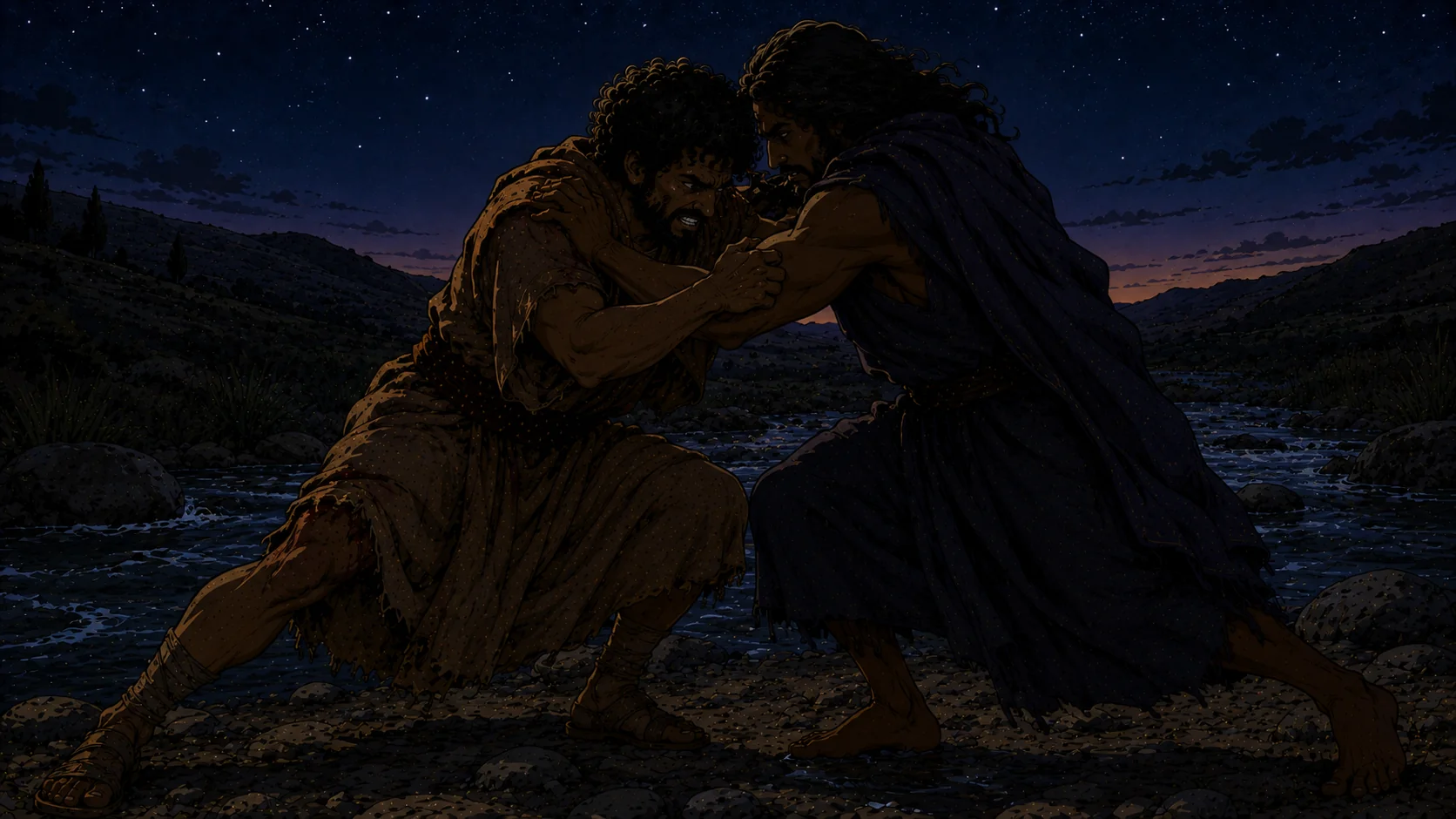
On the eve of his reunion with Esau — now coming with four hundred men — Ya'akov was alone on the north bank of the Jabbok River. He had sent everyone across: his wives, his children, all his possessions. He was left alone. Then a man wrestled with him until dawn broke. Neither could prevail. When the man could not overpower Ya'akov, he dislocated his hip socket — and Ya'akov still would not let go. The man said: "Release me, for the dawn is breaking." Ya'akov answered: "I will not release you unless you bless me." The blessing came. And then the renaming: "Your name will no longer be Ya'akov but Yisrael, for you have striven with God and with men and have prevailed."
Ya'akov named the place Peniel — "face of God" — because he had seen God face to face and his life was preserved. He crossed the river limping, marked by the encounter. And when he saw Esau, he bowed seven times. Esau ran to meet him and embraced him and wept. The brother he had fled for twenty years received him back as if the years had washed the wound clean. The reunion was whole. Ya'akov was no longer running. He was returning — to the land, to the family, to the covenant — as a man who had been broken open at a river and found he could still walk.
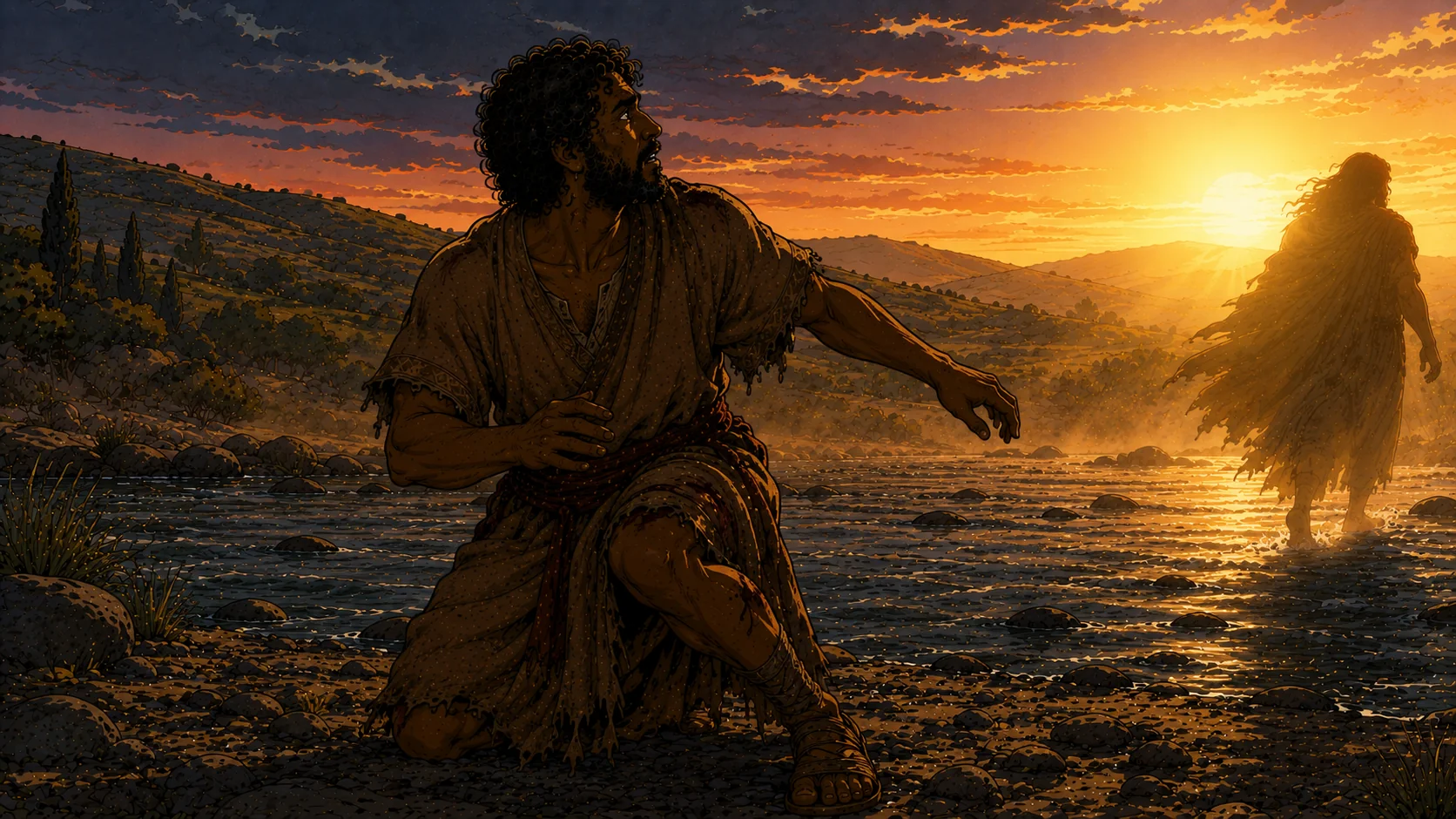 Bereshit 32:28–30 — "Your name will no longer be Ya'akov, but Yisrael." He crossed the Jabbok limping, with a new name, toward the brother he had fled for twenty years.
The return to Canaan was not without grief. Rachel died giving birth to Binyamin on the road to Bethlehem. Ya'akov set a pillar over her grave — a stone of memory for a woman who had been the center of his love for more than two decades. His daughter Dinah was violated at Shechem; his sons Shim'on and Levi took violent revenge, killing every male in the city. Ya'akov was devastated: "You have troubled me to make me odious to the inhabitants of the land." He had built no fortress — only an altar. He was a pilgrim in a dangerous country with sons who acted without his counsel. The household was fractured, and the next generation was already showing the fault lines.
Elohim told him to return to Bethel and dwell there, and to build an altar. He gathered his household, put away their foreign gods, and went up. Elohim appeared and renewed the covenant at Bethel a second time — renaming him Yisrael again, as if the first time needed to be sealed permanently into the place itself. The twelve sons were named — listed in full, the future twelve tribes of Israel. Yitzchak died at 180 in Hebron. Ya'akov and Esav buried him together, as their fathers had been buried before them. The arc that began with two brothers at war ended with two brothers at a grave, side by side.
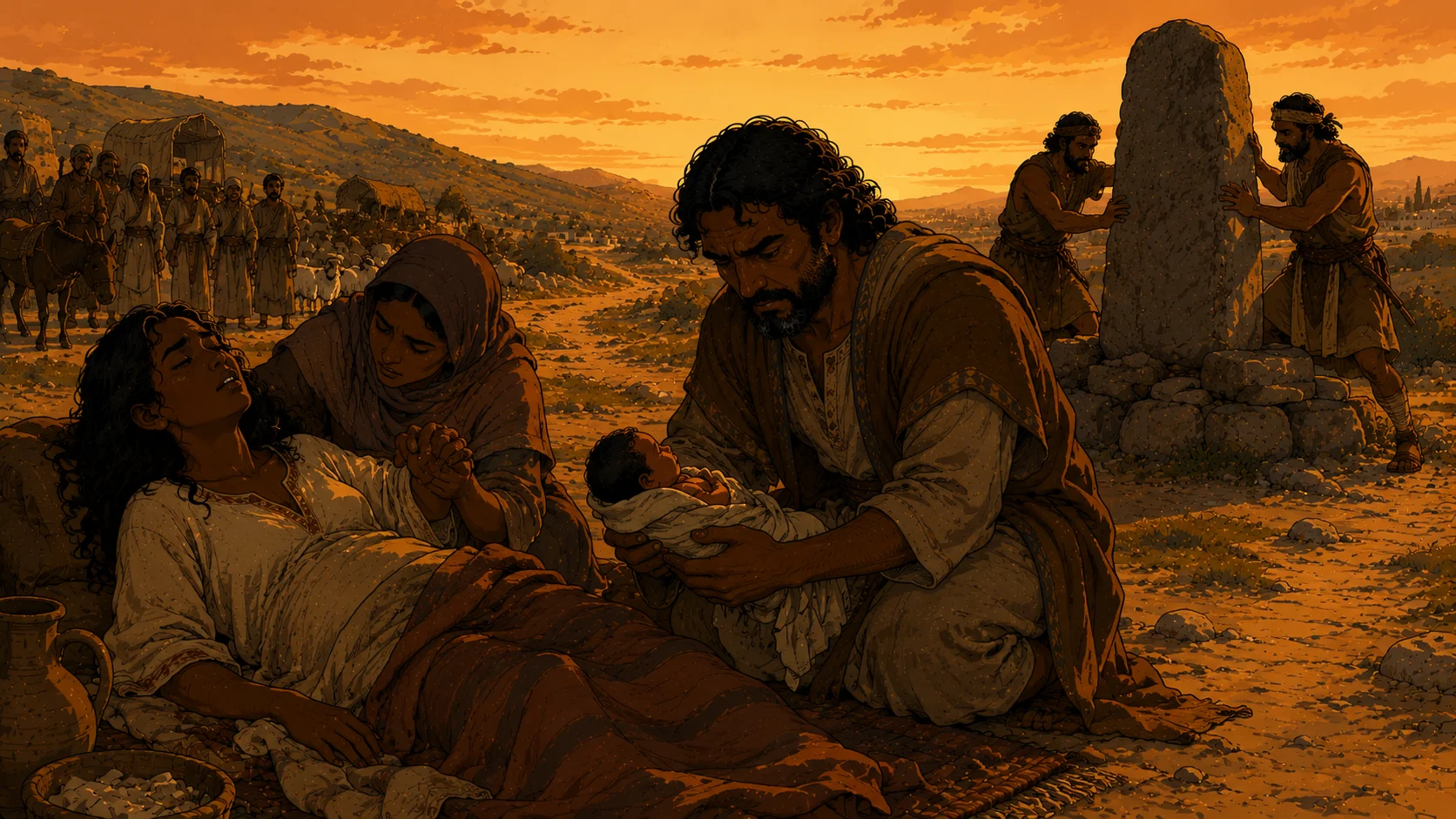 Bereshit 35:16–20 — Rachel died on the road to Bethlehem giving birth to Binyamin. Ya'akov set a pillar over her grave. The covenant moved forward carrying its grief.
The Jacob arc is the arc of becoming. He left as a man who took. He returned as a man who was renamed. The limp was not a defeat — it was the sign that he had stayed in the fight long enough to receive the blessing.
